
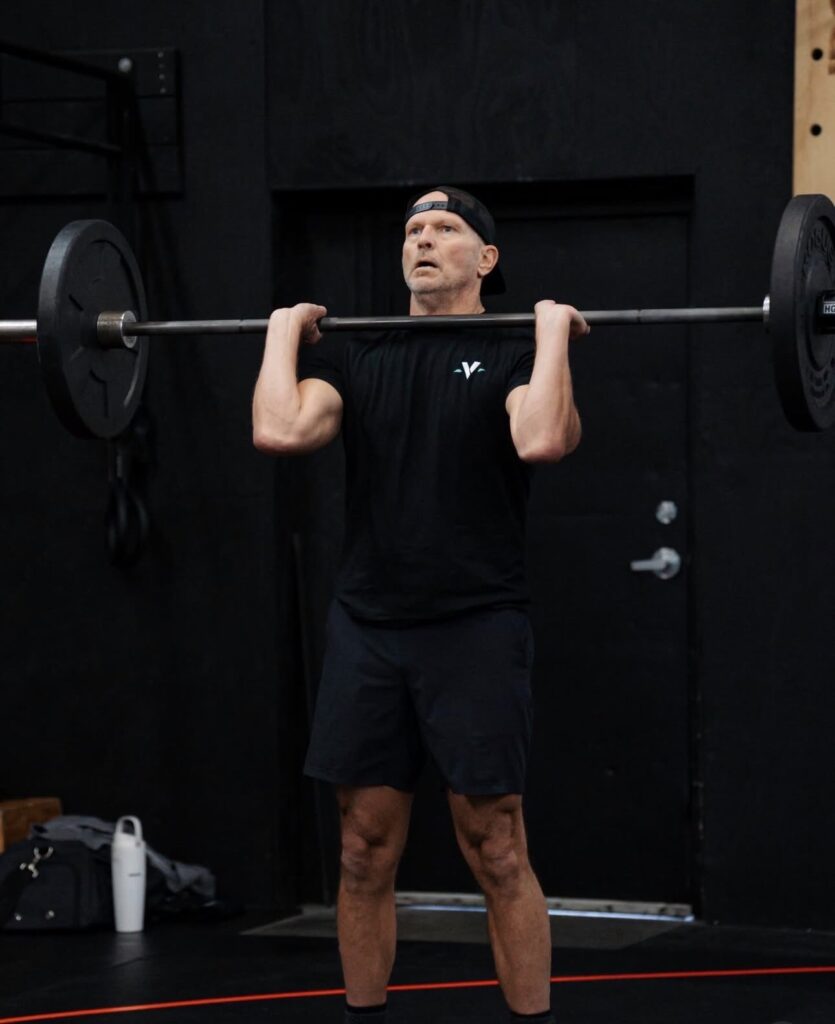
Hybrid training (combining strength work and cardiovascular training in a single program) is having a major moment, and we are here for it.
This post covers how we build training frequency at Eastside Athletics, both lifting and cardio together, as one system. As much as we love strength training, if cardiovascular fitness matters to you, it can’t be an afterthought bolted onto the end of a lifting plan. It has to be part of the architecture from the start.
How we decide how often you should train
We’re trying to find the highest training frequency your life can genuinely support. It’s not an exact formula, but a few questions help us get there:
- How long have you been training? Beginners typically get more from fewer strength sessions. The nervous system needs time to learn movements before volume becomes the priority. Cardiovascular training can be introduced more frequently from the start.
- What are you actually trying to achieve? Strength, hypertrophy, cardiovascular fitness, or some combination each has different demands. If cardio is a real goal, it gets real sessions, not leftover days.
- What does your life look like right now? Poor sleep, high stress, and a demanding job all affect your ability to recover from training. A program built for someone with minimal life stress should look different from one built for someone carrying a lot of it.
- Can you actually show up that many days? Not in theory but consistently, for the next three months. If the answer is uncertain, we start lower and build up. It’s easier to add a day than to recover from burnout or the discouragement of missing sessions.
If cardiovascular fitness is a real priority, here’s what changes
Many programs treat cardio as something you do on rest days, or when you feel like it. That works well enough if the goal is maintenance but it won’t move the needle if you actually want to improve your aerobic fitness: lower resting heart rate, a higher VO2 max, or faster recovery between hard efforts require structure and overload the same way strength training does.
For real improvement, cardio needs a minimum effective dose and consistent placement in the week:
| Cardio goal | Sessions/week | Session type | Where it fits |
|---|---|---|---|
| General fitness | 2–3 | Zone 2/3 — 30–45 min | Off days or after upper body sessions |
| Improve endurance | 3–4 | Mostly zone 2/3, some interval work, one longer session per week | Dedicated days — not stacked after hard lifting |
| Serious cardiovascular development | 4–5 | Zone 2 base + 1–2 higher intensity sessions | Cardio becomes the primary training block and lifting adjusts around it |
What people get wrong about cardio and lifting
People often treat cardio and lifting as separate budgets. They’re not. They draw from the same account, and that account is your recovery capacity.
A 45-minute hard cycling session the day before squats isn’t just tired legs. It’s systemic fatigue and glycogen your body needed for tomorrow. Your body doesn’t file it under “cardio” and leave the lifting column untouched.
Two rules we follow when placing cardio in a lifting week:
| Guidance | |
|---|---|
| Works well | Zone 2 cardio on off days. Things like walking, easy cycling, light rowing. It promotes blood flow and builds your aerobic base without adding to recovery debt. |
| Works well | Cardio after upper body sessions if you need to stack training. Your legs stay fresh for the next day’s lower body work. |
| Use carefully | Higher intensity cardio on your one full rest day. Fine if intensity stays honest — but most people’s “moderate” is harder than they think. |
| Avoid | Hard cardio the day before lower body training. You’ll feel it in your squats and deadlifts whether you expect to or not. |
Trade-offs at each lifting frequency
| Lifting days/wk | Best for | What you gain | What you give up |
|---|---|---|---|
| 2 days | Beginners / Maintenance | Plenty of room for cardio — this schedule can support serious aerobic development alongside lifting | The lifting volume ceiling is real. Not optimal for strength or hypertrophy goals. |
| 3 days | General fitness | Still space for 2–3 dedicated cardio sessions. Genuinely possible to improve both. | Advanced lifting goals will eventually outgrow it |
| 4 days | Intermediate / Advanced | The sweet spot for lifting. One or two cardio sessions fit well if intensity is managed. | Serious cardio development requires trade-offs in lifting volume |
| 5 days | Advanced | High lifting output. One cardio session on the rest day is realistic. | Cardio as a serious goal becomes difficult to accommodate |
| 6 days | Specialisation phases | Maximum lifting volume for hypertrophy or peaking | Dedicated cardio sessions are off the table. Warm-ups only. |
“The people who make the best long-term progress aren’t the ones who lift the most. They’re the ones whose engine can handle the work — and keep handling it month after month.”
Every program at Eastside Athletics is reassessed every 2–6 weeks. Frequency is a starting point, not a contract. What matters is whether you’re progressing. And if you’re not, something changes.