
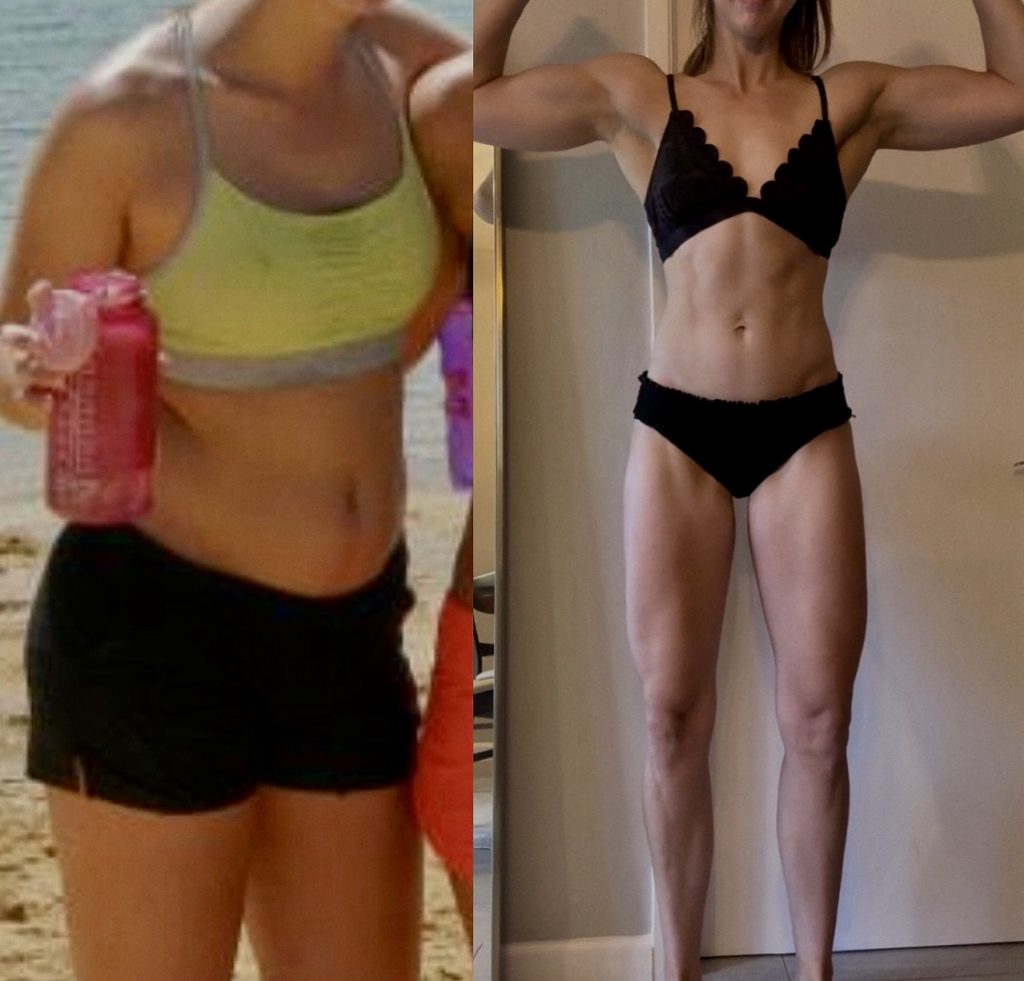
One of the most frequent questions we receive as personal trainers is how to structure a training program for body recomposition, which is the process of both losing fat and gaining muscle. In this blog post, we will explore the relationship between various training methodologies and body recomposition, discussing the key strategies we use at Eastside Athletics to assist individuals in achieving enduring changes to their physiques.
1. Progressive Strength and Hypertrophy Training
Muscle mass is essential to metabolic health. If you want to change your physique without extreme dietary restrictions or running yourself into metabolic hell, you need to be lifting weights.
At Eastside Athletics, we place considerable emphasis on progressive overload when devising well-structured training programs. Progressive overload is a fundamental principle in exercise science that involves gradually increasing the intensity, duration, or frequency of exercise to continually challenge the body and stimulate adaptation. It’s a cornerstone of effective training programs across various fitness goals, from building strength and muscle mass to improving endurance and skill acquisition.
Progressive overload is crucial for continual improvements in performance and physical fitness for several reasons:
Muscle Hypertrophy: By gradually increasing the demand placed on muscles, progressive overload stimulates muscle growth (hypertrophy) by causing micro-tears in muscle fibers that repair and adapt to become stronger and larger.
Strength Gains: Progressive overload is essential for increasing strength by continually challenging muscles to lift heavier weights. Over time, this leads to greater neuromuscular adaptations, such as improved motor unit recruitment and coordination.
Endurance Development: Progressive overload is also vital for improving cardiovascular and muscular endurance. By gradually increasing training volume or intensity, the body becomes more efficient at sustaining activity over longer durations.
Preventing Plateaus: Without progressive overload, the body adapts to the current training stimulus and reaches a plateau in performance. By progressively increasing the challenge, it’s possible to continually push past plateaus and achieve new levels of fitness and performance.
2. Sprint Training
Sprint training offers unique advantages for body recomposition. Sprinting engages fast-twitch muscle fibers, which are responsible for explosive movements and have a high potential for hypertrophy (growth). Additionally, this form of training stimulates the release of growth hormone and testosterone—essential for muscle development and fat metabolism.
At Eastside Athletics, we integrate sprint training as a powerful tool for body recomposition. It’s a time-efficient approach that challenges your cardiovascular system, enhances anaerobic capacity, and contributes to the development of a lean, healthy physique. Sprinting is a high-intensity training strategy that doesn’t need to be as frequent as your strength or low-intensity cardiovascular training. We recommend incorporating sprint intervals into your training program once or twice weekly.
3. Low-Intensity Steady State Cardio
Performing low-intensity or zone 2 cyclical cardio at 60-70% of your maximum heart rate is an excellent tool to boost mitochondrial number, function, and flexibility (the ability of mitochondria to use fat or glucose). Mitochondria, akin to muscles, weaken and become inefficient without training, contributing to metabolic disease and dysfunction. Cardiovascular training teaches our bodies to utilize energy (food) more efficiently. At Eastside Athletics, we advocate a minimum of 120 minutes of low-intensity steady-state cardiovascular training weekly.
When it comes to body recomposition, it’s not solely about nutrition, lifting weights, or cardio—it’s the synergistic combination of these elements that yields lasting changes. Every meal and every training session instructs our bodies on energy utilization. Fuel your body well, train your body at various intensities, and pick up something heavy.
For additional guidance on how to best structure a training program to facilitate changes in body composition, reach out to one of our educated and professional trainers at Eastside Athletics. We’d love to be a resource to you.