
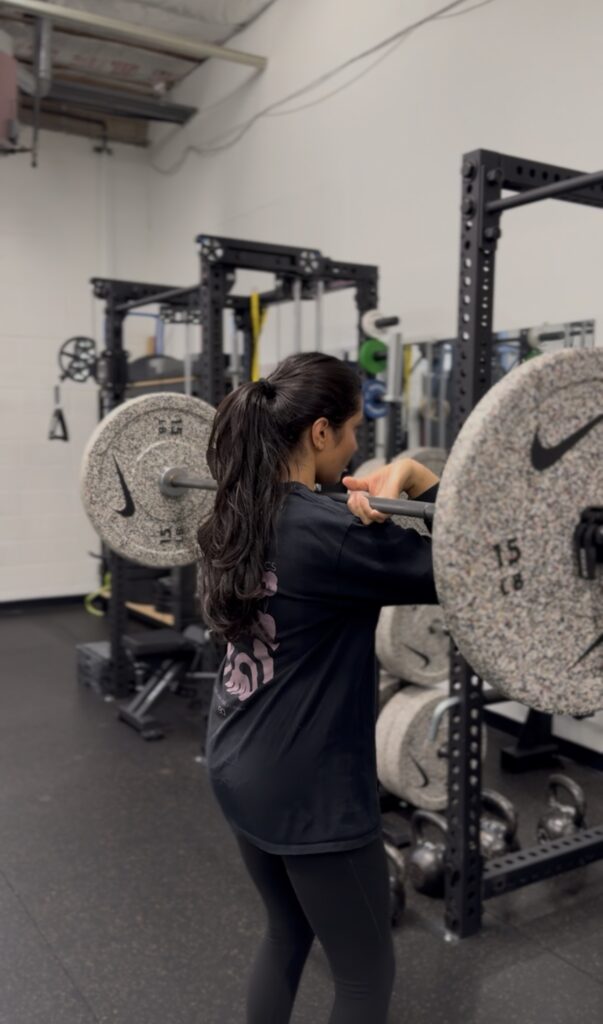
(From a former rehab professional turned personal trainer)
You hired an ex-rehab professional expecting clinically precise movement.
Instead, you got heavy squats and sarcasm.
Oops.
Before anyone trains with me, I try to be transparent about what I am not. Yes, I have a rehabilitation background. No, I’m not the trainer for endless gentle movement, stability drills, or months of “corrective” exercises. In fact, I’m pretty firm in my belief that when those things become the foundation of someone’s training program, they do people a massive disservice.
This blog is your permission slip to stop obsessing over posture and start building actual capacity.
The health and fitness industries have long sold the idea that perfect alignment equals safety. But a growing body of research shows that posture, alignment, and “movement quality” have weak and inconsistent relationships with pain or injury risk.
My current training philosophy is that what actually protects people is an overall healthy lifestyle, aerobic fitness, movement variability, and something called “load management”. Essetially, exposing the body to a broad range of physical demands and avoiding large spikes in volume or intensity.
Safety is never guaranteed, but we can massively reduce risk by being strong enough, fit enough, and resilient enough to handle the unpredictable realities of life: a misstep on a wet sidewalk, a toddler who suddenly throws their weight backward, a sprint up the stairs because you’re late.
When drills and corrective exercises come at the expense of building actual strength and cardiovascular fitness, we’re not helping people. When someone is deconditioned, under-trained, and already struggling with fatigue, weakness, or mobility, what they need is a path to greater physical capacity, not three months of isolated glute “activation.” Telling an under-trained adult they must perfect their patterns before they’re “ready” to train is, in my opinion, negligent.
As a previous clinician who has worked in acute care and skilled nursing facilities, I can tell you exactly what fills hospital beds:
- Chronic disease, usually metabolic in nature
- Falls
We don’t prevent those things by obsessing over core engagement or chasing biomechanical perfection. We prevent them by developing strength, power, coordination, and cardiovascular health through proper strength training. These attributes are the pillars of independence, especially as we age.
Our bodies are quite pragmatic in the way that they adapt to the demands we place on them and deteriorate when those demands disappear. If you don’t train strength, you lose strength. If you don’t elevate your heart rate, your cardiovascular system downshifts. Yet so many of you still believe that another day of deadbugs and hip airplanes is the best path forward.
The idea that someone needs perfect movement before they can handle real training is so completely backward. I have trained people in their 70’s, people with spinal cord injuries, and with neurological impairments. I have yet to think someone’s movement was “dysfunctional” enough that strength training and meeting basic activity guidelines should be anything other than our first priority. Not an eventual priority. Not something to “work toward.” The first one. When people get stronger, improve their aerobic fitness, reduce excess adiposity, and build actual physical competence through consistent training, most of their supposed dysfunctions either resolve naturally or simply stop being relevant anway.
I am not reckless. I am not going to throw a client with zero training history under a barbell on Day 1. I am responsible with how I increase both volume and intensity for clients. And as an ex Junior Olympic gymnast, I can absolutely focus on the minutiae of movement when I need to. But for the vast majority of the general population, that’s not where my priorities lie. Would I love for you to improve your hip mobility? Yes. But if you can’t do a push-up or go out and run a mile, I do not care what your hip internal rotation looks like. We don’t get to focus on those things until you’re meeting minimum physical activity requirements.
When you work with me, you’re getting someone who takes professionalism seriously. I prepare meticulously, I show up on time and I follow through. But our personal training sessions won’t look clinical. They’ll be unmistakably human: difficult, messy, imperfect. I don’t need you to resemble a textbook diagram. I need you to show up with genuine effort.
We lift heavy things. We move like athletes, not patients. We breathe hard. We do things that might feel scary at first. We lean into discomfort rather than running from it. We rebuild trust in your body through demonstrated competence.
I can absolutely coach your movement with precision when it matters. But I’ll also push you with an intensity that will feel uncomfortable. Because as a health and fitness professional, I know that I shape my clients’ beliefs about what their bodies can do. It’s my responsibility to communicate the truth about what drives adaptation. And that, my friends, is stress.
I left the rehabilitation world because it always felt like arriving after the fact. Too little, too late. When I ask you to push yourself, it’s because I genuinely believe it’s the thing that will save or significantly improve the quality of your life. Hard work today is what purchases independence and function for decades to come.
I gain nothing from your injury or burnout.
I gain everything from keeping you healthy and consistent.
If you’re in the Bellevue or Seattle area and want personal training that is evdence-based, BPS-informed, functional and honest book a consultation or reach out with questions. Let’s build a body that’s strong enough to carry you through life!